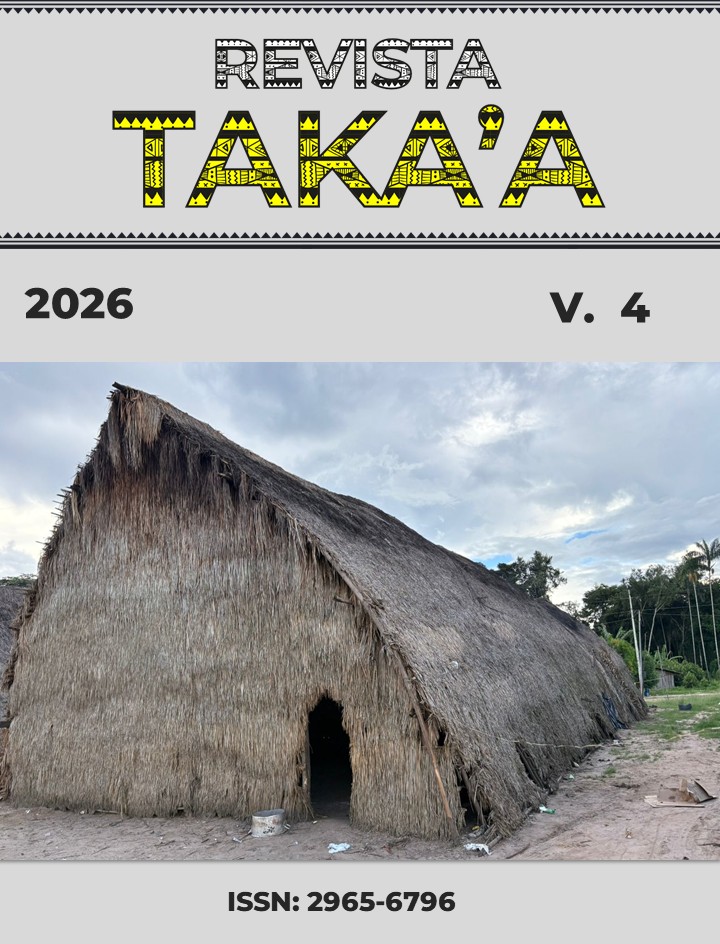
Decolonizing Codes: Indigenous Literature in Dialogue with Artificial Intelligence
DOI:
https://doi.org/10.30681/rtakaa.v4i1.15183Keywords:
Decolonial, Indigenous Literature, Artificial intelligence, Original Epistemologies, Intercultural EducationAbstract
This article analyzes the potentialities and challenges of dialogue between contemporary Indigenous literature and Artificial Intelligence (AI) technologies from a decolonial perspective. The central objective is to investigate how AI can interact with Indigenous epistemologies without reproducing colonialist logics of cultural erasure. Methodologically, a qualitative approach is adopted, based on bibliographic and analytical-discursive procedures, grounded in decolonial theories and works by Indigenous authors such as Daniel Munduruku, Eliane Potiguara, and Ailton Krenak. Results indicate that, although current algorithms tend to reinforce hegemonic biases in interpreting Indigenous narratives, productive possibilities exist when technological development incorporates ethical principles of consultation, co-production, and digital sovereignty for communities. It is concluded that decolonizing dialogue between Indigenous literature and AI requires not only technical adjustments, but an epistemological reorientation that recognizes the pluriversality of knowledge. As a contribution, the study proposes guidelines for intercultural pedagogical practices and for the responsible development of digital tools in Indigenous school education contexts, aligning with the interdisciplinary focus of Revista Taka'a.
Downloads
References
BENJAMIN, Ruha. Race after technology: abolitionist tools for the new Jim code. Cambridge: Polity Press, 2019.
CARROLL, Stephanie Russo et al. The CARE principles for indigenous data governance. Data Science Journal, Geneva, v. 19, n. 1, p. 1-12, 2020.
DORRICO, Julie. Literatura indígena contemporânea: história, memória e resistência. Rio de Janeiro: Malê, 2021.
GRAÚNA, Graça. Literatura indígena: oralidade, memória e tradição. São Paulo: Hedra, 2018.
GUERRA, Mirta. Sumak kawsay / bem viver: epistemologias indígenas para um mundo plural. Quito: Abya-Yala, 2019.
KRENAK, Ailton. Ideias para adiar o fim do mundo. São Paulo: Companhia das Letras, 2019.
KUKUTAI, Tahu; THOMPSON, John (Ed.). Indigenous data sovereignty: toward an agenda for indigenous data governance. Canberra: ANU Press, 2022.
MIGNOLO, Walter D. Desobediência epistêmica: retórica da modernidade, lógica da colonialidade e gramática da descolonialidade. São Paulo: n-1 edições, 2014.
MUNDURUKU, Daniel. A literatura indígena brasileira e o diálogo com a escola. São Paulo: Peirópolis, 2015.
NOBLE, Safiya Umoja. Algorithms of oppression: how search engines reinforce racism. New York: NYU Press, 2018.
POTIGUARA, Eliane. Metade cara, metade máscara. São Paulo: Global, 2004.
QUIJANO, Aníbal. Colonialidade do poder, eurocentrismo e América Latina. In: LANDER, Edgardo (org.). A colonialidade do saber: eurocentrismo e ciências sociais. Perspectivas latino-americanas. Buenos Aires: CLACSO, 2005. p. 117-142.
SANTOS, Boaventura de Sousa. O fim do império cognitivo: a afirmação das epistemologias do Sul. Belo Horizonte: Autêntica, 2020.
TUHIWAI SMITH, Linda. Descolonizando metodologias: pesquisa e povos indígenas. 2. ed. Brasília: Paralelo 15, 2018.
WALSH, Catherine. Interculturalidade, crítica decolonial e práticas insurgentes. Educação & Sociedade, Campinas, v. 36, n. 133, p. 829-846, 2015.