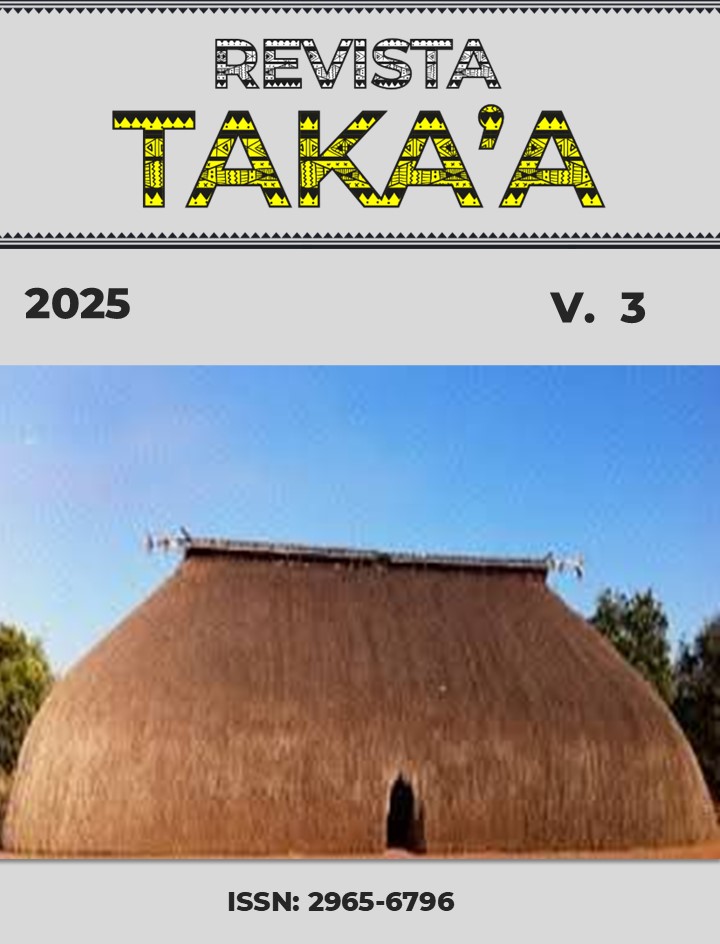
A força da tradição na voz e nas mãos das mulheres Kariri-Xocó: a cerâmica como epistemologia indígena
DOI:
https://doi.org/10.30681/rtakaa.v3i1.14174Palabras clave:
Ceramistas Kariri-Xocó, Artes Tradicionais, Memória ancestral, Poteca, Resistência culturalResumen
Este artigo apresenta um relato de vivências junto às louceiras Kariri-Xocó, ceramistas indígenas de Porto Real do Colégio (AL), cujas mãos moldam não apenas potes, mas também memórias, afetos e modos de vida. A escrita emerge a partir de uma disciplina do Programa de Pós-Graduação em Crítica Cultural da UNEB, Campus II, Alagoinhas, que estimulou uma articulação entre experiências pessoais e pesquisa etnográfica. O texto entrelaça escutas sensíveis, observações e reflexões com saberes ancestrais transmitidos oralmente e corporificados na prática ceramista, especialmente no processo do “bolo de barro”, tradição que resiste ao tempo e à homogeneização cultural. Como expressão de resistência e continuidade, propõe-se a aplicação da metodologia Poteca, uma “biblioteca oral construída com potes”, como estratégia educativa, lúdica e política, capaz de ativar memórias, valorizar a cultura indígena e convocar as novas gerações à reinvenção da tradição.
Descargas
Referencias
ARELARO, L.R.G., CABRAL, M.R.M. Paulo Freire: por uma teoria e práxis transformadora. In: BOTO, C., ed. Clássicos do pensamento pedagógico: olhares entrecruzados. Uberlândia: EDUFU, 2019, pp. 267-292.
BÂ, A. H. A tradição viva. In: KI-ZERBO, Joseph (org.). História geral da África, I: metodologia e pré-história da África. 2. ed. Brasília: UNESCO, 2010. p. 167-214.
CALVET, Louis-Jean. Tradição oral e tradição escrita. São Paulo: Parábola Editorial, 2011.
CANDAU, J. Memória e identidade. Tradução: Maria Letícia Ferreira. 1. ed., 1. reimpr. São Paulo: Contexto, 2012.
CARNEIRO, D. S.; MIKILIS, I. B; Spoladore, F. F. Situação sociolinguística de famílias Sateré-Mawé residentes em Parintins. Miguilim – Revista Eletrônica do Netlli, Crato, v. 10, n. 2, p. 598 - 618, 2021.
DELORY-MOMBERGER, C. A condição biográfica: ensaios sobre a narrativa de si na modernidade avançada. Natal: UFRN, 2012.
GERLIC, S. Cantando as culturas indígenas. Coleção Índios na Visão dos Índios, n. 18. Ilhéus; Brasília: ONG Thydêwá; Coordenação Geral de Educação Escolar Indígena, 2012.
KARIRI-XOCÓ, N. Mundo circular Kariri-Xocó. In: THYDÊWÁ. Memória. Fortaleza: Thydêwá, 2012. Disponível em: https://www.thydewa.org/wp-content/uploads/2012/07/memoria.pdf. Acesso em: 5 set. 2025.
KARIRI-XOCÓ, N. Cultura Digital, Cultura Popular, Blogs, História.2009. Disponível em: http://kxnhenety.blogspot.com/?m=0. Acesso em: 2 jun. 2024.
KARIRI-XOCÓ, N. Memória da Mãe Terra. Coleção Índios na Visão dos Índios, n. 17. Ilhéus: ONG Thydêwá, 2014.
MUNIZ, R.; SOUZA, L.D. Potes que guardam histórias de vida. Vidas que viram histórias: a Poteca como dinâmica interativa das narrativas orais. In: OLIVEIRA, E. S.; SANTOS, K. M. (org.). Educação, tecnologia, ambiente e sustentabilidade: perspectivas multidisciplinares. Cruz das Almas: [s.n.], 2017. p. 91-103.
MUNIZ, R. Poteca: a biblioteca oral no pote de barro. In: Fórum de Debates: bilinguismo indígena no Brasil. Universidade Estadual da Bahia. Evento online, 02 jun. 2022. Vídeo (1h 23 min). Disponível em: https://www.youtube.com/watch?v=QNcMAkAHDiA. Acesso em: 30 mai. 2025.
SANTANA, M. D. da S. A vida de uma louceira Kariri-Xocó. AntHropológicas Visual, v. 7, n. 2, 2021. Seção: Ensaios Fotográficos.
SANTOS, B. de S. Prefácio. In: MARTINS, B. S.; SANTOS, A. C.; LOPES, S. (org.). As sociedades contemporâneas e os direitos humanos -Contemporary societies and human rights. Ilhéus: Editus, 2018. p. 9-10.
SUZART, E. C. Kariri-Xocó: arquivos e práticas por uma cultura bilíngue. 2020. 200 f. Dissertação (Mestrado em Crítica Cultural) – Universidade do Estado da Bahia, Campus II, Alagoinhas, 2020.
WALSH, C. Presentación. In: JUNCOSA BLASCO, J. E. Civilizaciones en disputa: educación y evangelización en el territorio Shuar. Quito: Universidad Andina Simón Bolívar, Sede Ecuador; Editorial Abya-Yala, 2020. p. 17-19. (Serie Investigación Decolonial, n. 3).